Lunquor
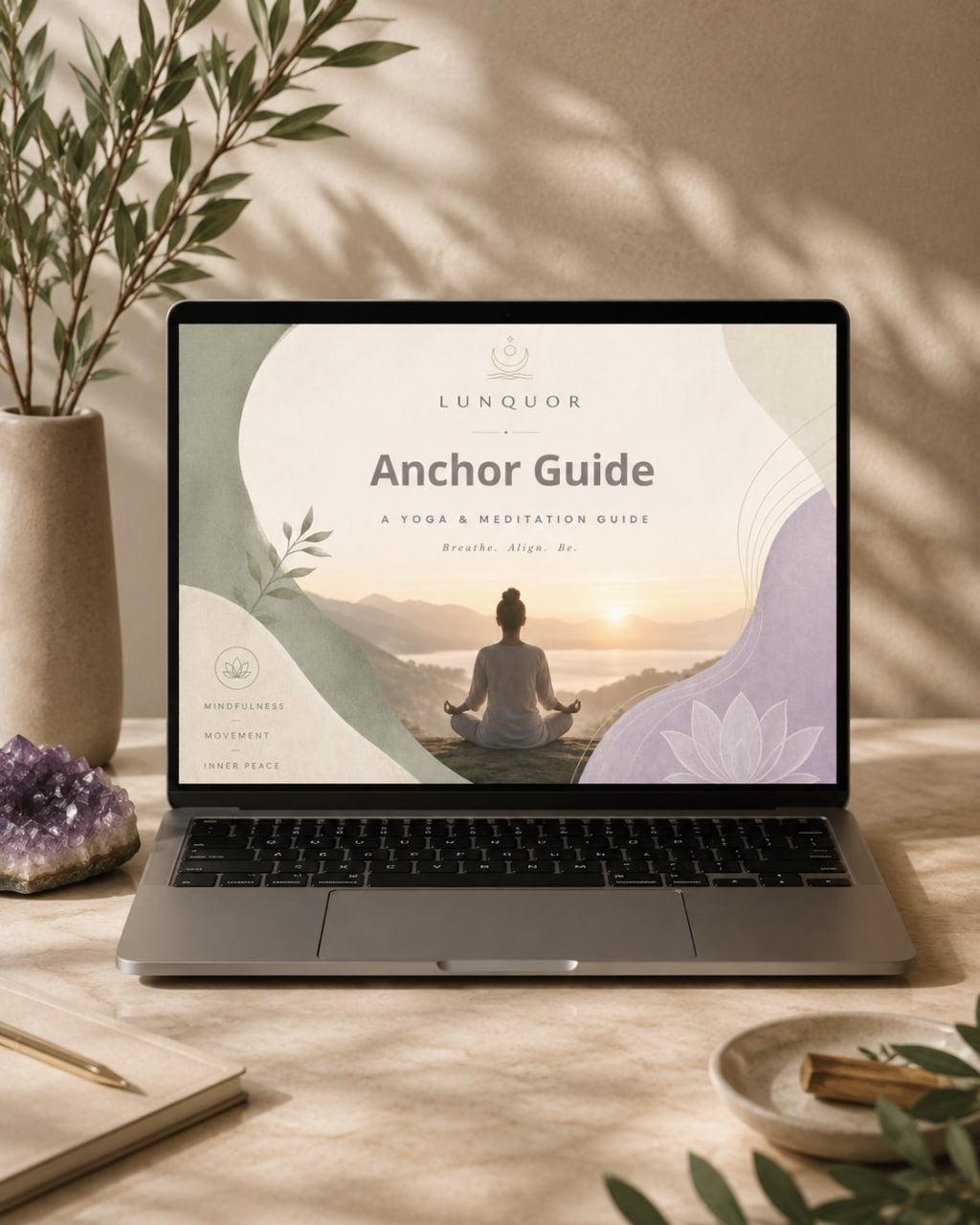
Anchor Guide
Anchor Guide
Couldn't load pickup availability
- 🌿 Digital file available after purchase
- 🕯️ Long-term availability
- 🔒 Secure checkout
- 🌙 Content updated in 2026
Self-paced learning overview
1. Problem Statement
For many people, the day passes in constant switching between tasks, thoughts, and outside stimuli. Even when the body feels tired, the mind may remain tense and continue looking for the next task. Because of this, it can be difficult to feel steady, pause for a few minutes, and understand what the body needs right now. Yoga or meditation practice may start to feel like another item in the schedule when there is no gentle system of orientation. Without a sense of inner support, a person often moves through the day automatically, without noticing signals from the body, breath, and mood.
2. Solution
Anchor Guide offers a calm practice format where the main idea is to find your own point of support. The course combines short sessions with breathing, mindful movement, body observation, and simple written materials. Instead of complex demands, you receive steady prompts that help you pause, feel the surface beneath you, notice your breathing, and choose a fitting pace. The materials can be used at different parts of the day: in the morning for setting a tone, during the day for a pause, or in the evening for a gentle closing. Anchor Guide helps practice become not a separate event, but a quiet point of orientation you can return to.
3. What's Inside
Anchor Guide includes materials built around the theme of support. In this course, support is explored not only as the physical feeling of feet, palms, or back on a surface, but also as a way to treat yourself with more attention during and after practice.
The first module is dedicated to physical support. It explains how to notice the contact of the body with the floor, mat, chair, or another surface. You work with simple positions: sitting, standing, and lying down. In each position, attention is directed to where the body is supported, where there is unnecessary tension, how weight is distributed, and how breathing changes when you feel steadier.
The second module moves to breathing as an inner anchor. The materials help you observe the natural rhythm of inhale and exhale without changing it sharply. You learn to notice how breathing feels in the chest, belly, back, and shoulders. This block includes several short practices that can be done before movement or on their own when you need a small pause.
The third module contains gentle movement sequences. They focus on the feet, legs, pelvis, back, shoulders, and neck. Each exercise is connected with the feeling of support: how the feet touch the floor, how the pelvis helps create steadiness, and how the spine responds to a slow bend or turn. The materials do not ask for complex flexibility or long preparation; they invite you to study movement within your own comfort.
The fourth module is dedicated to pauses between actions. Practice is often seen only as a set of exercises, but the pause is what helps you notice changes in the body. In this block, you work with short stops after movement: standing for several breathing cycles, sitting in silence, placing your palms on the ribs, noticing warmth in the body, or observing a change in mood. These pauses make practice more aware and gentle.
The fifth module focuses on meditation of support. The materials include short practices for sitting and lying down, where attention gradually moves from surrounding sounds to breath, from breath to body sensations, and from body sensations to calm observation. The practices are shaped so they do not feel like a difficult task. You simply return to one point of orientation: breath, surface, palms, feet, or a reminder word.
The sixth module helps carry the feeling of support into daily life. It includes short exercises that can be done before an important conversation, after long work, before sleep, or when the day feels too full. For example: feel the feet on the floor, take several natural breaths, soften the jaw, lower the shoulders, or write one sentence about your current state. These actions are small, yet they help return attention to the present moment.
Anchor Guide includes written materials for independent work. Among them are the “My Point of Support” checklist, a page for short notes after practice, a selection of body-observation questions, and several session options of different lengths. You can choose a shorter or longer format depending on the day, your state, and the time you have.
A separate block is dedicated to shaping a personal ritual. It invites you to choose one small repeated element: a specific place for practice, a phrase for beginning, a breathing pause, a short movement, or a note after the session. This element becomes a familiar signal for the body and mind that now there is space to slow down and turn attention toward yourself.
4. Who is this for?
Anchor Guide is for people who want to feel more steadiness in their own practice. This course is for those who value simple structure, calm explanations, and materials they can return to on different days. It is suitable for beginners who are just getting familiar with yoga and meditation, as well as for those who already have experience but want more attention to support, breath, and body observation.
This tier is also suitable for people with full schedules. The materials do not require long daily sessions, so they can be used in parts. One day may be dedicated to breathing, another to movement, and another to a short meditation or written note.
Anchor Guide may be useful for those who often feel that the day passes too quickly and without pauses. The course offers simple points of orientation that help bring attention back to the body, space, and breath. At the center of the course are not complexity, but steadiness, softness, and calm contact with yourself.
5. What You'll Learn
- How to feel physical support while sitting, standing, and lying down.
- How to use breathing as a calm point of orientation.
- How to notice tension in the shoulders, jaw, back, and neck.
- How to perform gentle movements for the feet, legs, pelvis, and spine.
- How to pause between exercises and notice changes in the body.
- How to create a short meditative practice around the feeling of support.
- How to choose a session format according to the state of the day.
- How to use written notes for self-observation.
- How to carry attention from practice into ordinary tasks.
- How to close a session without abruptly returning to rush.
- How to create a small personal ritual for a calm beginning.
- How to work with the body without comparison or unnecessary pressure.
6. 30-day return terms
We want the course choice to feel calm and clear. If, after purchasing Anchor Guide, you feel that the materials do not match your expectations, you can write to us within 30 days according to the store rules. The Lunquor team will review your message with care and explain the next steps.
Before purchasing, you can read the course description, module themes, and material format. This will help you understand whether Anchor Guide matches your rhythm, request, and preferred way of practicing.
Are Lunquor courses suitable for beginners?
Are Lunquor courses suitable for beginners?
Yes, the materials are created for different levels of experience. You can move at your own pace, return to topics, and choose practices that match your current state and schedule.
How do I choose a tier?
How do I choose a tier?
Focus on your rhythm, desired depth of study, and preferred material format. Some tiers are made for first contact with the topic, while others offer broader work with practice, breath, movement, and daily rituals.
Share