Lunquor
Path Guide
Path Guide
Couldn't load pickup availability
- 🌿 Digital file available after purchase
- 🕯️ Long-term availability
- 🔒 Secure checkout
- 🌙 Content updated in 2026
Self-paced learning overview
1. Problem Statement
It can be difficult to keep sequence in practice when the day changes, mood shifts, and the body has different needs each time. One day you may want more movement, another day only quiet, and sometimes it is hard to understand where to begin. Because of this, yoga or meditation may feel scattered: one exercise, one breathing practice, one pause, yet no clear route. When there is no calm structure, a person may postpone practice or choose random materials that do not always match their current state. As a result, practice does not become part of the day, even when the wish to learn and explore yourself remains.
2. Solution
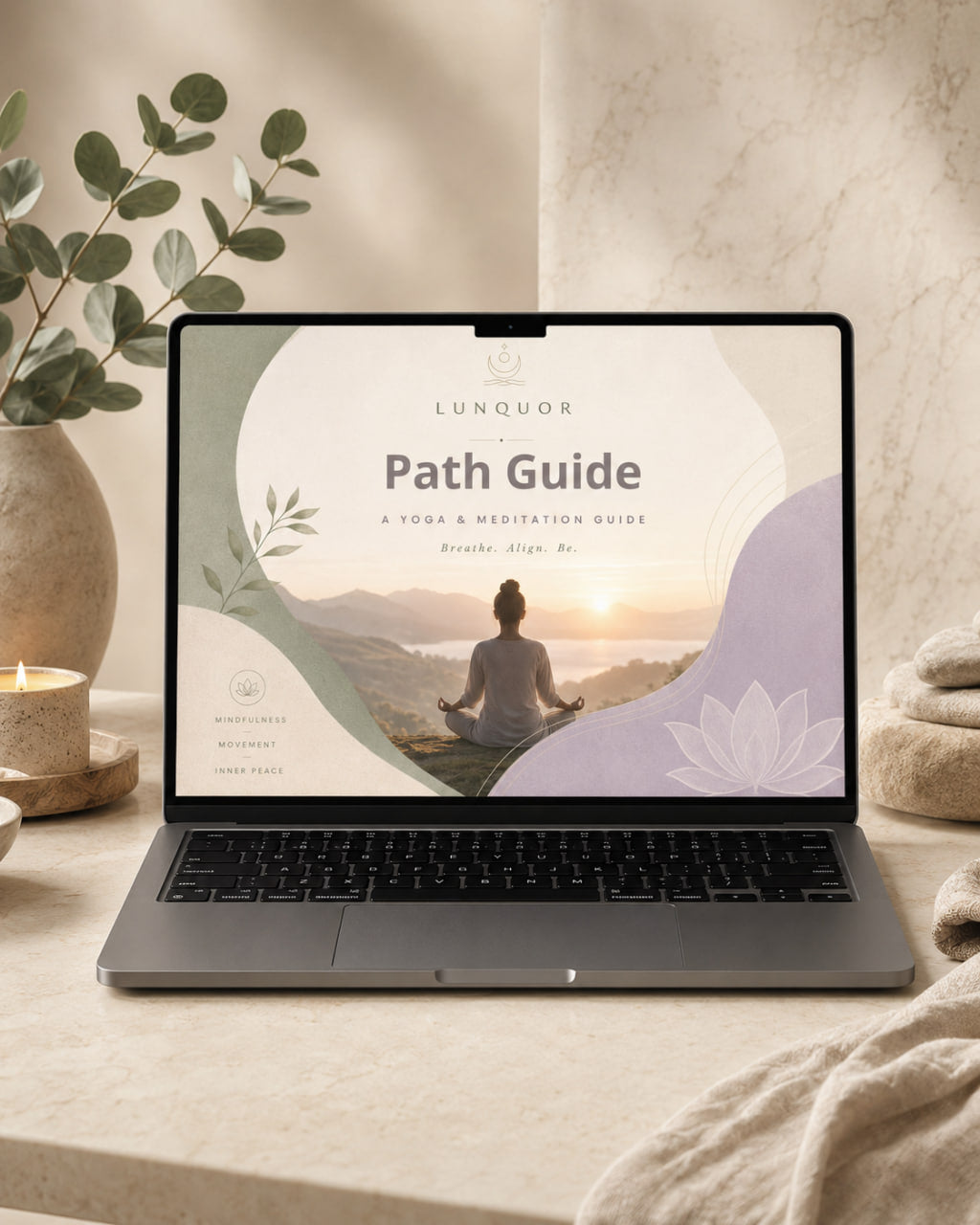
Path Guide is created as a gentle learning route where each stage has a simple role. The course helps you begin with short observation, move into breathing, add movement, close with a pause, and note your state in writing. The materials do not require the same session length every day, so you can choose a shorter or broader format according to your real day. At the center of the course is not a rigid plan, but a clear direction that supports attentive care for the body and breath. Path Guide is for those who do not want to get lost among themes, but would rather have a calm path through practice.
3. What's Inside
Path Guide includes materials arranged as a route with several parts. Each part helps you move into the next one without sharp pacing: from preparation to breathing, from breathing to movement, from movement to meditation, and from meditation to a short written reflection.
The first module is dedicated to beginning practice. It explains how to pause before a session and notice the state you are arriving with. You work with simple points of orientation: body position, sensations in the feet or pelvis, tension in the shoulders, natural breathing, and overall mood. This module helps you avoid entering practice automatically and instead take a few minutes for attentive preparation.
The second module explores the choice of route. The materials include several session options: a short format, a medium format, and a broader format. The short version fits a full day when only a few minutes are present. The medium format combines breathing, movement, and a pause. The broader format gives more space for bodywork, meditation, and notes after practice. This structure helps you avoid postponing a session because of time and instead choose the route that truly fits today.
The third module is dedicated to breathing as the first step of the route. It includes exercises for observing inhale and exhale, gently lengthening the exhale, and sensing the ribs, chest, belly, and back. The materials explain how not to control breathing too much, but to listen to its natural pace. This block can be used before movement or on its own when a short pause is needed during the day.
The fourth module moves into movement. It includes gentle sequences for the neck, shoulders, back, pelvis, legs, and feet. Each exercise is connected with the earlier breathing block, so movement does not begin abruptly. You learn to notice how the inhale supports lifting or lengthening, how the exhale helps lower the shoulders, round the back, or pause. All movements can be done at your own pace, with a smaller range or with additional stops.
The fifth module is dedicated to transitions between stages. In this course, what matters is not only which exercises you do, but also how you move from one block to another. The materials invite you to close movement slowly, take several breathing cycles, notice body sensations, and only then move into meditation or notes. This approach helps the session feel more complete and keeps attention present between parts of practice.
The sixth module focuses on a meditative pause. After movement, you can sit or lie down, feel the surface under you, notice natural breathing, and follow a short observation practice. The materials include options for different states: a morning pause, a pause after work, a pause before sleep, and a pause after an emotionally full day. Each practice has a simple structure and does not require long sitting.
The seventh module is dedicated to written closing. It includes pages for short notes after practice: what I feel in the body, which pace was fitting, where tension appeared, which movement I would like to repeat, and what shifted after breathing. The written part does not need to be long. One or two sentences are enough to better notice your rhythm and return to the materials later.
The eighth module helps build your own route. You can choose one breathing block, two or three movements, one meditative pause, and one written prompt. The materials show how to combine these elements for different days: when the body needs movement, when quiet is needed, when attention feels scattered, when the day has been tense, or when you want a very short practice. This allows you to use the course flexibly and not stay tied to one scenario.
Path Guide also includes a selection of thematic routes. There is a “Morning Setting” route, a “Pause Between Tasks” route, a “Gentle Evening” route, a “Return to Breath” route, and a “Body After Sitting” route. Each one includes several steady steps that can be followed at a calm pace.
A separate section is dedicated to working with days when you want to shorten practice. The course does not ask you to follow all materials every time. Instead, Path Guide helps you see even a short session as a complete small route: pause, breathing, one movement, quiet, and a note. This approach makes practice closer to real life and helps keep a warm relationship with yourself.
4. Who is this for?
Path Guide is for people who want a clear sequence in yoga and meditation practice. It is a fitting choice for beginners who find it difficult to decide where to begin and how to combine different elements of a session. The course is also suitable for those who have practiced before but want more clarity, structure, and smoothness between breathing, movement, and meditation.
This tier fits people with different schedules. If the day is full, you can take a short route. If there is more time, you can follow a broader version with movement, a pause, and notes. The materials allow you not to wait for special conditions, but to work with the time and state you have now.
Path Guide may be useful for those who like having several practice scenarios nearby. If it matters to you not to get lost among materials, but to see a simple order of actions, this course gives a calm direction. At the center of the tier are attention, sequence, body observation, and respect for your own rhythm.
5. What You'll Learn
- How to begin practice with short body observation.
- How to choose a shorter or broader session route.
- How to use breathing as the first step of practice.
- How to connect breathing with gentle movement.
- How to work with the neck, shoulders, back, pelvis, legs, and feet.
- How to move between session stages without rushing.
- How to close movement through a meditative pause.
- How to write short notes after practice.
- How to create a morning, daytime, or evening route.
- How to adapt practice to a full day.
- How to notice which format fits your current state.
- How to gather your own sequence from breathing, movement, quiet, and writing.
6. 30-day return terms
We want the course choice to feel calm and clear. If, after purchasing Path Guide, you feel that the materials do not match your expectations, you can write to us within 30 days according to store rules. The Lunquor team will review your message with care and explain the next steps.
Before purchasing, you can read the course description, module themes, and material format. This will help you understand whether Path Guide matches your rhythm, request, and preferred way of practicing.
Are Lunquor courses suitable for beginners?
Are Lunquor courses suitable for beginners?
Yes, the materials are created for different levels of experience. You can move at your own pace, return to topics, and choose practices that match your current state and schedule.
How do I choose a tier?
How do I choose a tier?
Focus on your rhythm, desired depth of study, and preferred material format. Some tiers are made for first contact with the topic, while others offer broader work with practice, breath, movement, and daily rituals.
Share